


Trends Report
Physical Medicine and Workers’ Comp
The Cost-of-Care Workers’ Comp vs. Group Health
Key Trends

50%

45%

20%
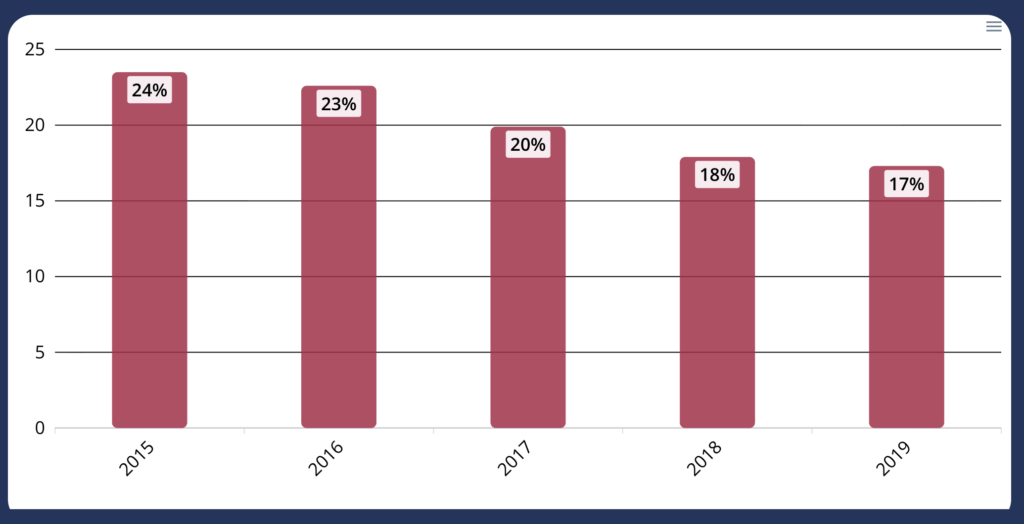
Post-Surgical PT Cases Down
Telerehabilitation
- Patient Perspective: Sometimes telerehabilitation can be a necessity for faster return to work and not “just” a convenience. A traveling nurse practitioner who conducts in-home patient assessments for a large group health insurance company discovered how telerehab could enable her to meet treatment expectations and continue to work—something that wouldn’t have been possible otherwise.
- Physical Therapist Perspective: When Jill Carnahan, PT, DPT, began working on telerehab cases at MedRisk, she was skeptical. “The more patients I’ve treated, the more I realized the power of voice. It requires focus, communication and collaboration, but when the patient gets it on their own, you know they really get it.”
Patient Education
- Physical therapy as first-line treatment can improve patient outcomes, but what about a consultation with a physical therapist? Can a simple conversation in advance of treatment affect outcomes? Research says yes.
- A 2018 study from the University of Utah found that a discussion between patient and provider about the severity of pain and prognosis can reduce the chance of opioid prescription by up to 65%.
- A PT consult through MedRisk addresses catastrophic thinking and other negative factors following an occupational injury. For example, a patient may have a standard diagnosis but may express a fear of reinjury during a consultation. This information can be used to inform treatment strategies and prevent delayed recovery.
Pioneering Managed PT
Legislative Recap
In January, the Centers for Medicare and Medicaid Services (CMS) launched a National Coverage Analysis to determine whether Medicare should pay for acupuncture treatment for chronic low back pain. CMS cited its motivations as a push from the US Department of Human and Health Services to deliver evidence-based, non-drug treatment solutions for chronic pain in response to the opioid crisis.
In July, CMS published a proposed Decision Memo approving Medicare coverage for Acupuncture. Coverage for acupuncture will be limited to clinical trials for treating low back pain. CMS will respond to public comments in the future.
New York Governor Andrew Cuomo signed into law an omnibus budget bill containing authorization for providers of acupuncture to treat injured workers within the WC system, provided the patient has a referral from a physician or nurse practitioner. Physical and occupational therapists are among the clinicians that are permitted to perform acupuncture if they are certified to perform these services. The Workers’ Compensation Board, which supported this expansion, has proposed a regulation (12 NYCRR 323.1) and the comment period ended August 18, 2019.
When the regulation is adopted by the WCB, New York will join a handful of other states in authorizing payment for acupuncture under workers’ compensation when the services are deemed medically necessary. Most of the jurisdictions that affirmatively permit acupuncture for WC claimants require a referral from a treating physician.
North Carolina recently enacted legislation to join the PT Compact, an interstate reciprocal agreement permitting physical therapists licensed in one state to practice in another. The PT Compact makes it easier for physical therapists to treat across jurisdictions removing the administrative barriers to multi-jurisdictional practice. You can stay up to date on which states have enacted legislation or are in the process of enacting legislation by visiting the PT Compact website.
Virginia recently enacted legislation to join the PT Compact, an interstate reciprocal agreement permitting physical therapists licensed in one state to practice in another. The PT Compact makes it easier for physical therapists to treat across jurisdictions removing the administrative barriers to multi-jurisdictional practice. You can stay up to date on which states have enacted legislation or are in the process of enacting legislation by visiting the PT Compact website.
Arizona recently enacted legislation to join the PT Compact, an interstate reciprocal agreement permitting physical therapists licensed in one state to practice in another. The PT Compact makes it easier for physical therapists to treat across jurisdictions removing the administrative barriers to multi-jurisdictional practice. You can stay up to date on which states have enacted legislation or are in the process of enacting legislation by visiting the PT Compact website.
In January 2019, California became the first state to adopt a fee schedule using 32 distinct regional rates for MSA-based localities, based on Medicare Geographic Practice Cost Index (GPCI), which is now in the process of a six-year phase-in. Since many jurisdictions currently use other Medicare payment rules, and since use of dominant Medicare regional payment methodology offers both improved health care access to claimants and operational economies to WC agencies, it is possible that other states will follow suit.
The primary beneficiaries of the GPCI based regional fee schedule are providers in some of the higher-cost urban areas, who would see regulatory rate increases. Payers would be required to modify their bill review systems in order to properly track regulatory rates and providers’ treatment locations.
Senate Bill 537 has been signed into law by Governor Newsom. The law requires networks to give a standardized disclosure form to their payer clients if network provider reimbursements are less than 80 percent of the Official Medical Fee Schedule rates.
The Division of Workers’ Compensation is given the task of developing the provider reimbursement disclosure form required by this provision, which becomes effective July 1, 2021. Medical provider networks will also be required to post a roster of their participating providers online and provide the DIR with the authority to investigate complaints, conduct random reviews and take enforcement action against medical provider networks that fail to comply with roster postings.
Arkansas recently enacted legislation to join the PT Compact, an interstate reciprocal agreement permitting physical therapists licensed in one state to practice in another. The PT Compact makes it easier for physical therapists to treat across jurisdictions removing the administrative barriers to multi-jurisdictional practice. You can stay up to date on which states have enacted legislation or are in the process of enacting legislation by visiting the PT Compact website.
Colorado recently enacted legislation to join the PT Compact, an interstate reciprocal agreement permitting physical therapists licensed in one state to practice in another. The PT Compact makes it easier for physical therapists to treat across jurisdictions removing the administrative barriers to multi-jurisdictional practice. You can stay up to date on which states have enacted legislation or are in the process of enacting legislation by visiting the PT Compact website.
Kentucky recently enacted legislation to join the PT Compact, an interstate reciprocal agreement permitting physical therapists licensed in one state to practice in another. The PT Compact makes it easier for physical therapists to treat across jurisdictions removing the administrative barriers to multi-jurisdictional practice. You can stay up to date on which states have enacted legislation or are in the process of enacting legislation by visiting the PT Compact website.
Nebraska recently enacted legislation to join the PT Compact, an interstate reciprocal agreement permitting physical therapists licensed in one state to practice in another. The PT Compact makes it easier for physical therapists to treat across jurisdictions removing the administrative barriers to multi-jurisdictional practice. You can stay up to date on which states have enacted legislation or are in the process of enacting legislation by visiting the PT Compact website.
Nevada enacted two laws that impose new regulatory requirements on workers’ compensation managed care. Senate Bill 365 requires all “health carriers,” including workers’ compensation payers, to explicitly state contract rights and obligations in provider agreement and to maintain a website listing all customers granted network access via the provider agreement. The new law is due to take effect on January 1, 2020, after the Division of Industrial Relations has adopted implementing regulations.
Nevada also enacted Senate Bill 381, which permits a WC insurer to limit employee choice of physician or chiropractor to those listed on its provider panel, but only if the panel contains, by discipline or medical specialty, at least twelve providers or, if there are fewer than twelve authorized by the Division, all of the members of the discipline or specialty.
Neither of the new statutes have much impact on MedRisk workflows for operations in Nevada. MedRisk provider agreements and operations already conform to the “best practices” standards of SB 365. Further, the increased network access standards of SB 381 relate only to physicians and chiropractors.
Research & Insights
Three Things We Think We Know About Workers’ Comp. Three Conversations That Challenge Them.
Some ideas become so accepted that we stop questioning them. Recovery means an injured worker is ready to return to

One Cupcake at a Time: Building Trust in AI
Claims leaders see what AI can do: faster decisions, better outcomes for injured workers, new leverage for adjusters. What they’re

Visit MedRisk at WCI 2026
If you’re heading to WCI 2026 in Orlando, be sure to stop by Booth 907 and connect with the MedRisk

Scaling Expertise in a Constrained Claims Workforce
The conversation around AI in workers’ compensation has covered familiar ground: staffing shortages, rising caseloads, and pressure on adjusters. These

The Value of Payment Integrity in Workers’ Comp
In workers’ comp, not all savings are created equal. Reimbursement strategies must be evaluated not just on low-cost unit price, but how they impact overall

MedRisk Supports Kids’ Chance of America at National Conference
Kids’ Chance’s purpose is simple: give kids of workers who have been injured on the job a chance at a
MedRisk by the Numbers
272,095
TOTAL NETWORK PROVIDERS
559,783
INJURED WORKERS TREATED IN 2019
100 %
U.S. BASED SERVICE MODEL
97.7 %
OF NETWORK PROVIDERS AGREE WITH OUR CLINICAL RECOMMENDATIONS
4
AVERAGE HOURS TO SCHEDULING
2.6
DAYS TO INITIAL EVALUATION
98.1 %
PATIENT SATISFACTION