


Trends Report
Comparing Workers’ Compensation – Examining PT Outcomes within the Broader Health Care System
Each year in the United States, approximately 300 million physical therapy sessions are conducted to aid patients in injury recovery.i The increasing use of PT services is attributed to various factors, notably the growing body of evidence demonstrating that greater reliance on physical medicine helps to mitigate healthcare expenses in other areas.
Utilization of physical medicine services often coincides with a reduction in surgical interventions, the use of prescription medication, as well as shorter hospital staysii. Outside of workers’ compensation, the broader healthcare market is prioritizing PT care and removing barriers to help patients increase the ‘Speed to PT Care.’
In the 2024 Industry Trends Report, MedRisk examines data from the broader healthcare market to see where the use of PT over alternative treatments is delivering positive clinical and economic benefits and what we can learn by looking at our own data.
What We Can Learn from the Broader U.S. Healthcare System
Within the U.S. healthcare system, we’re seeing an increased focus on the speed to provide physical therapy services to patients. Group health and government-sponsored programs alike are making it easier for patients to visit physical therapists promptly.
Mounting Evidence Indicates that Direct and Faster Patient Access to PT Improves Outcomes
According to new research from the Department of Defense (DoD), direct access to physical therapy improves patient outcomes and reduces costs. The study conducted at Joint Base Lewis-McChord credits better cost and health outcomes for patients seeing PT first for musculoskeletal care.
Recognizing the benefit of getting patients to physical therapist services as soon as possible after injury, UnitedHealthcare launched a pilot program aimed at increasing access to physical therapist services to encourage patients to seek more conservative care routes for lower back pain.
Reported Savings Per Episode of Care When Using Physical Therapy Over Alternative Treatments:
$39,533
CARPAL TUNNEL SYNDROME (CTS)
Net Economic Savings
$4,160
Low Back Pain
Net Economic Savings
$10,739
LATERAL EPICONDYLITIS
Net Economic Savings
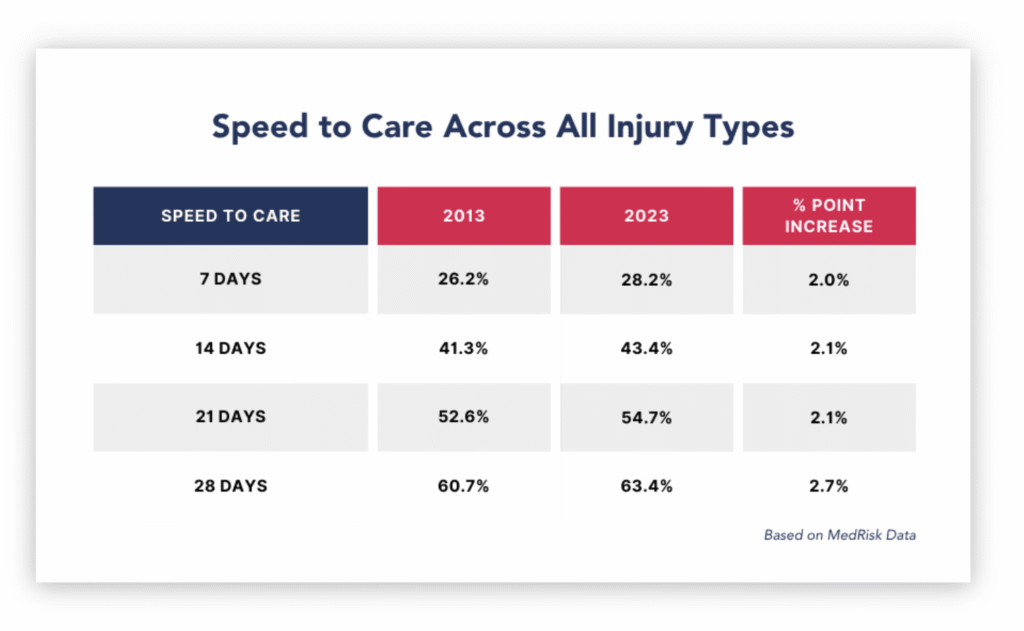
10 Year Look Back: Across All Injury Types ‘Speed to PT’ Stalls
In Workers’ Compensation, Speed to Care Lags in these Three Conditions
127 Days
Speed to Care for CTS Claims
61 Days
Speed to Care for Lower Back Pain
74 Days
Speed to Care for Lateral Epicondylitis
Carpal tunnel syndrome (CTS) is related to repetitive hand movements commonly occurring in production workers and administrative staff when there is compression of the median nerve at the wrist, specifically the carpal tunnel.
Use of physical therapy services over surgery for CTS has been shown to improve patient quality of life by reducing pain and improving function and nerve conductionii. At 127 days to initiate PT care, there is a significant opportunity to increase speed to care to impact claim outcomes.
Psychosocial Barriers to Recovery
It’s not just the injury or speed to care that’s impacting health outcomes. Psychosocial factors have an impact on claim outcomes as well.
One way to predict long-term disability and work absenteeism in injured employees with acute and chronic musculoskeletal pain from soft tissue injuries is by using the Örebro Musculoskeletal Pain Screening Questionnaire (ÖMPSQ). This screening tool is used throughout the healthcare system – both in workers’ compensation and other health plans.
ÖMPSQ identifies psychosocial and functioning-related risk factors among individuals with musculoskeletal pain and classifies individuals as low, medium or high risk.
Using the ÖMPSQ to screen injured employees, MedRisk found a correlation between the patient’s risk score and the total number of visits required to treat their injury.
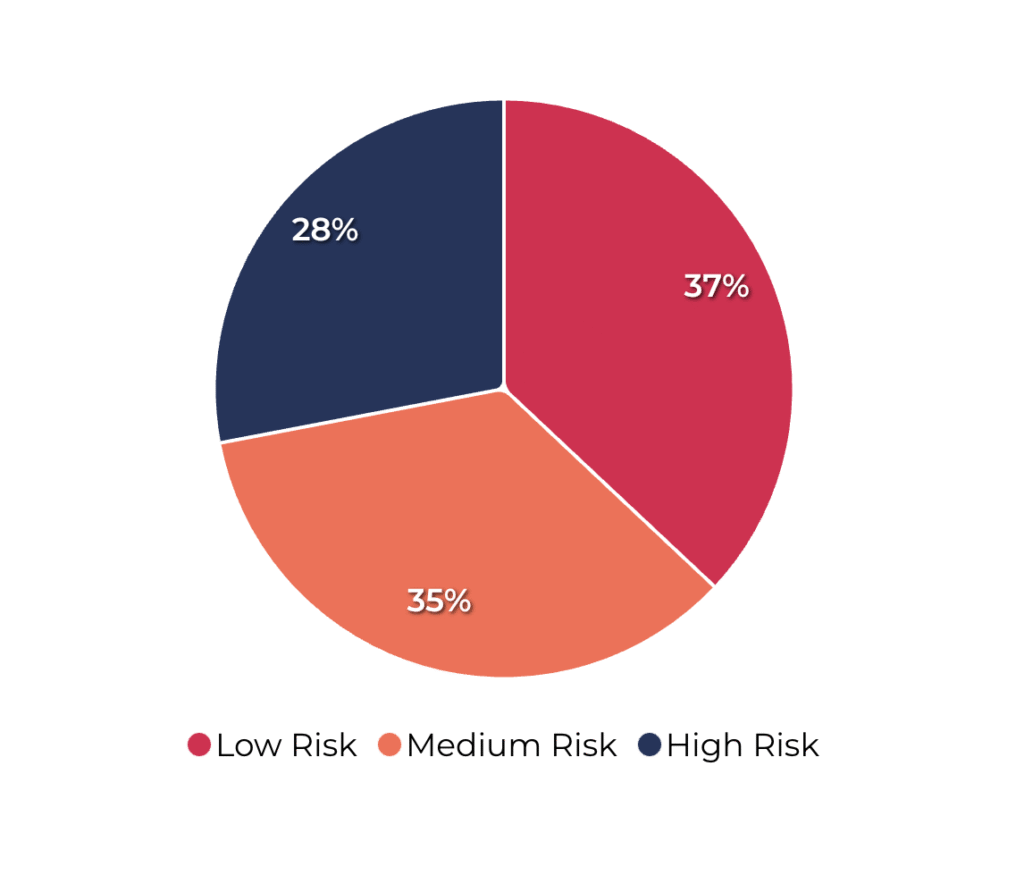
Örebro Score at First Screening
The Örebro Risk Score provides early insight to claim risk and the opportunity to intervene, as appropriate, to support positive claim outcomes.
At the first screening, injured employees’ risk scores are fairly evenly distributed among low, medium and high risk, with slightly more than a quarter of injured employees categorized as high risk.
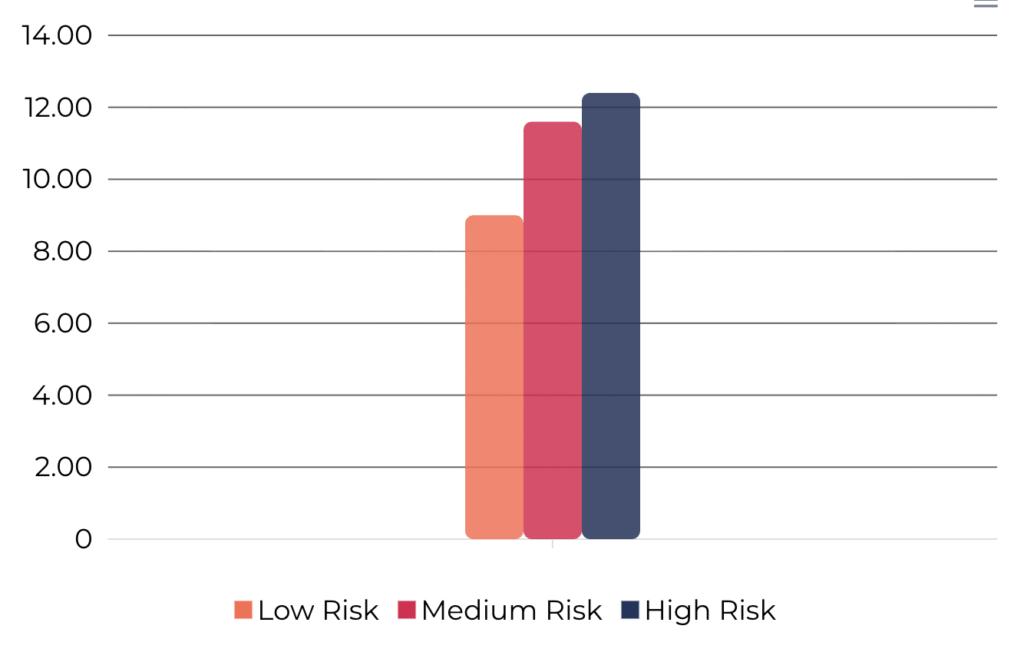
PT Visits by Örebro Score at First Screening
There is a direct correlation between the injured employee’s risk score at first screening and their total number of PT visits.
Injured employees with medium Örebro risk scores on the first screening had a 22% increase in the total number of PT visits compared to injured workers categorized with low-risk scores, increasing to a 27% increase for those individuals with a high-risk score at first screening.
Digital MSK Solutions: A Mini-Guide for PT
Categorizing digital MSK solutions grants you the power to quickly grasp each tool’s purpose (support, supplement, or substitute) and its potential impact on the recovery journey. Need to compare features or costs? Categories make it a breeze. Ultimately, understanding these categories empowers you to make informed decisions about which tools might best fit your program as a whole and offer maximum effectiveness.
Support
Supplement
These tools aim to expedite recovery while working alongside the existing rehabilitation model.
Enhanced Self Care: The use of motion tracking apps and wearable devices during independent exercise can drive compliance and provide real-time performance feedback to the patient and provider. Virtual reality tools offer an immersive environment for addressing a variety of concerns including pain, anxiety and restricted mobility.
Telerehabilitation: Platforms allowing patients access to rehab professionals between, or in lieu of, in-clinic sessions allow for greater patient engagement and continuity of care.
Substitute
While still in its early stages, some tools aim to partially replace certain aspects of clinical care.
Tech-assisted assessment includes the use of hardware and AI-powered software to evaluate musculoskeletal conditions and generate care plans (typically independent exercise programs).
Tech-assisted self-care guidance includes the instruction and monitoring of exercise programs using motion-tracking apps and/or sensors.
Why Research Matters
The workers’ compensation landscape, as we’ve shown, is ripe with opportunities to optimize for both financial and medical success. Progress thrives on out-of-the-box thinking, and we’ve pinpointed key areas where collective action can show its full potential. Through collaboration, we can not only achieve improved financial results but also accelerate patient recovery, paving the way for a collective win.
At MedRisk, we’re constantly delving into research, analyzing data, and leveraging our long-standing expertise to turn these possibilities into concrete solutions for our valued customers and partners.
MedRisk by the Numbers

558,870
Injured Workers Treated by MedRisk Providers
150K+
Total Network Providers in MedRisk Network
90%
% of WC Payers Who Choose MedRisk for Managed PT Services
Why Research Matters
The workers’ compensation landscape, as we’ve shown, is ripe with opportunities to optimize for both financial and medical
success. Progress thrives on out-of-the-box thinking, and we’ve pinpointed key areas where collective action can show its full
potential. Through collaboration, we can not only achieve improved financial results but also accelerate patient recovery, paving the way for a collective win.
At MedRisk, we’re constantly delving into research, analyzing data, and leveraging our long-standing expertise to turn these possibilities into concrete solutions for our valued customers and partners.
iIBIS World, 2022. iiNational Institutes of Health, National Library of Medicine. 2023. iii, ivThe Economic Value of Physical Therapy in the United States. American Physical Therapy Association, 2023. vGeorgetown University Health Policy Institute, McCourt School of Public Policy. Chronic Back Pain. viHoy DG, Smith E, Cross M, et al. The global burden of musculoskeletal conditions for 2010: an overview of methods. Ann Rheum Dis 2014; 73:982–989. viiNonfatal Occupational Injuries and Illnesses Requiring Days Away From Work, 2015. Accessed September 5, 2018. viiiThe Association between Early Opioids Prescribing and the Length of Disability in Acute Lower Back Pain: A Systematic Review and Narrative Synthesis.